
SOMEWHERE IN NORTHWEST CONNECTICUT, Aug. 17 — The pleasant summer ritual of bobbing around in a warm water lake lazily catching largemouth bass and other finny denizens has been less than ideal. Weather and work, work and weather. They’re not coordinating very well.
It’s been a warm and wet summer and there’s a lot of water in the lake. Water has been running over the spillway for six weeks straight. This is unusual. It’s usually bone dry this time of year.
The lake is not very deep. Ten to 20 feet most of the way, with a couple of spots that get down to 40-plus and one that’s about 60 feet down.
But for the bulk of the acreage there is not enough depth to get the kind of churn that circulates colder water from the bottom to the top. The water temp is basically uniform, and that uniform temperature is between 78 and 80 degrees.
Bass, perch, panfish etc. are all much more tolerant of higher water temperatures than the fickle trout, who go into Witness Protection once the water temp hits 68.
But even lunker bass and silly bluegills draw the line somewhere, and that line seems to be…
You guessed it: 78 to 80 degrees.
Some observations, midway through the month:
If you want surface action the best time is dawn. Alas, I have not made it out of bed at dawn — yet. Second best is dusk, and I finally induced a LMB to come up from its hidey hole in the grass at the bottom to grab a big fat yellow popper I was twitching around in a vaguely hopeful manner.
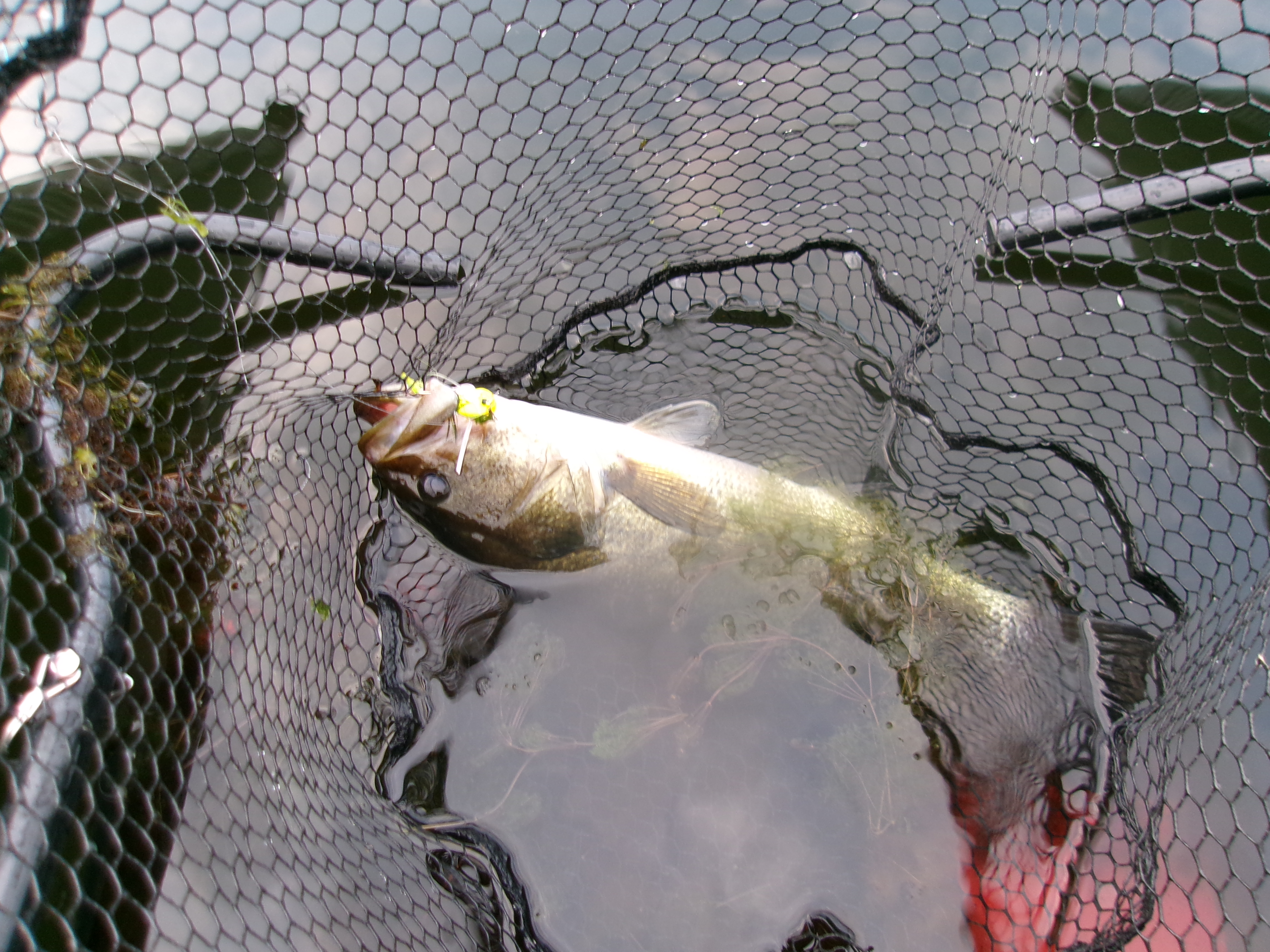
Between the giant net and moderate wide angle lens the majesty of this largemouth bass is not apparent. It’s about 18 inches long, four inches wide, and probably weighs between three and four pounds.
Also like most LMBs, it gets tired easily. Note the resigned, fatalistic expression. Bucket mouths are nothing like their distant cousins, the smallmouth bass. Every SMB I’ve ever met thought it was a lot bigger than it actually was, and behaved accordingly.
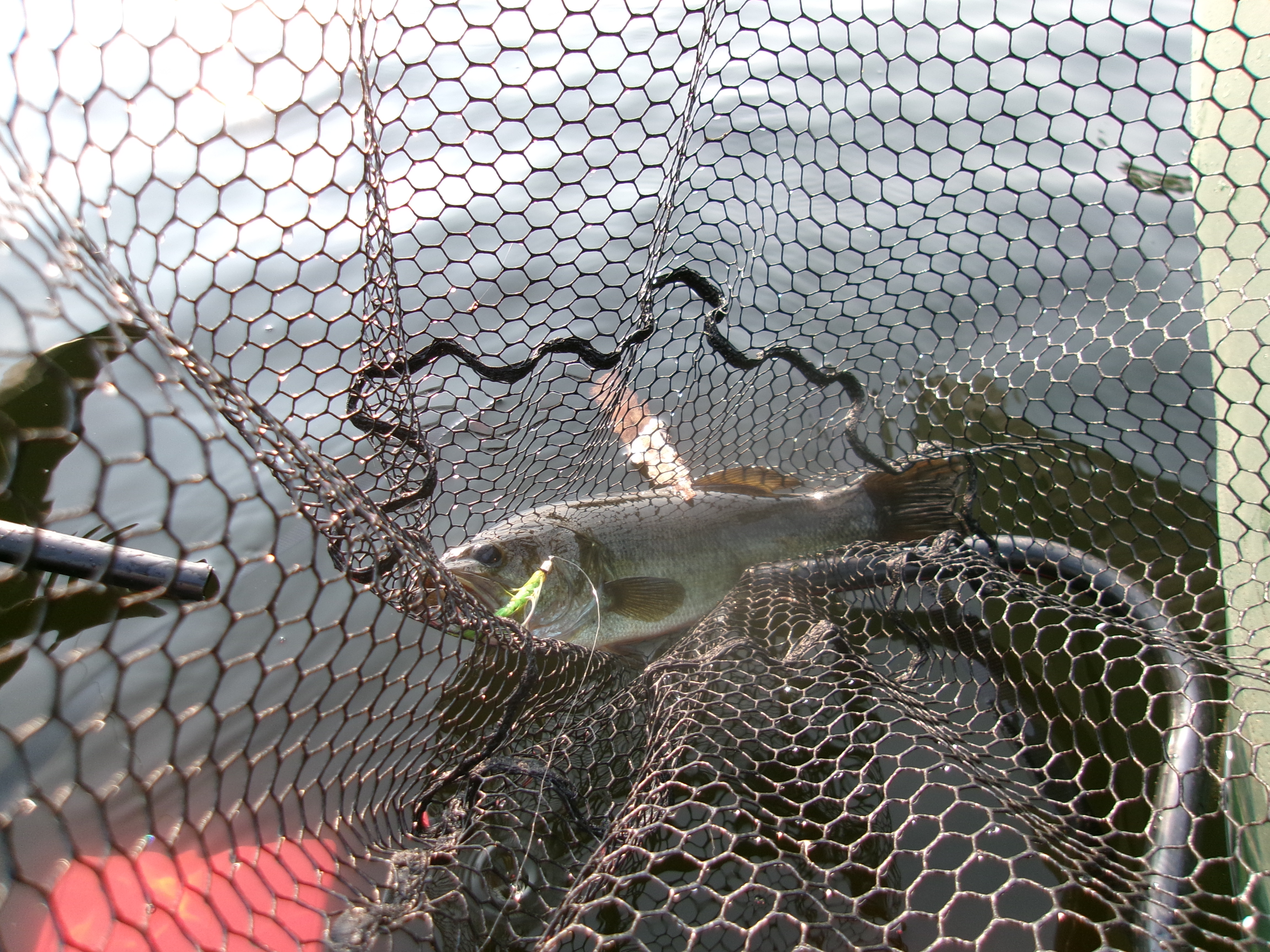

The overwhelming majority of the action, such as it is, has been subsurface. Here is a medium-sized LMB that took a streamer fished deep, and a photo in hand for perspective. This one was spunkier than most. Jumped a couple of times before throwing in the towel. I appreciate the effort.
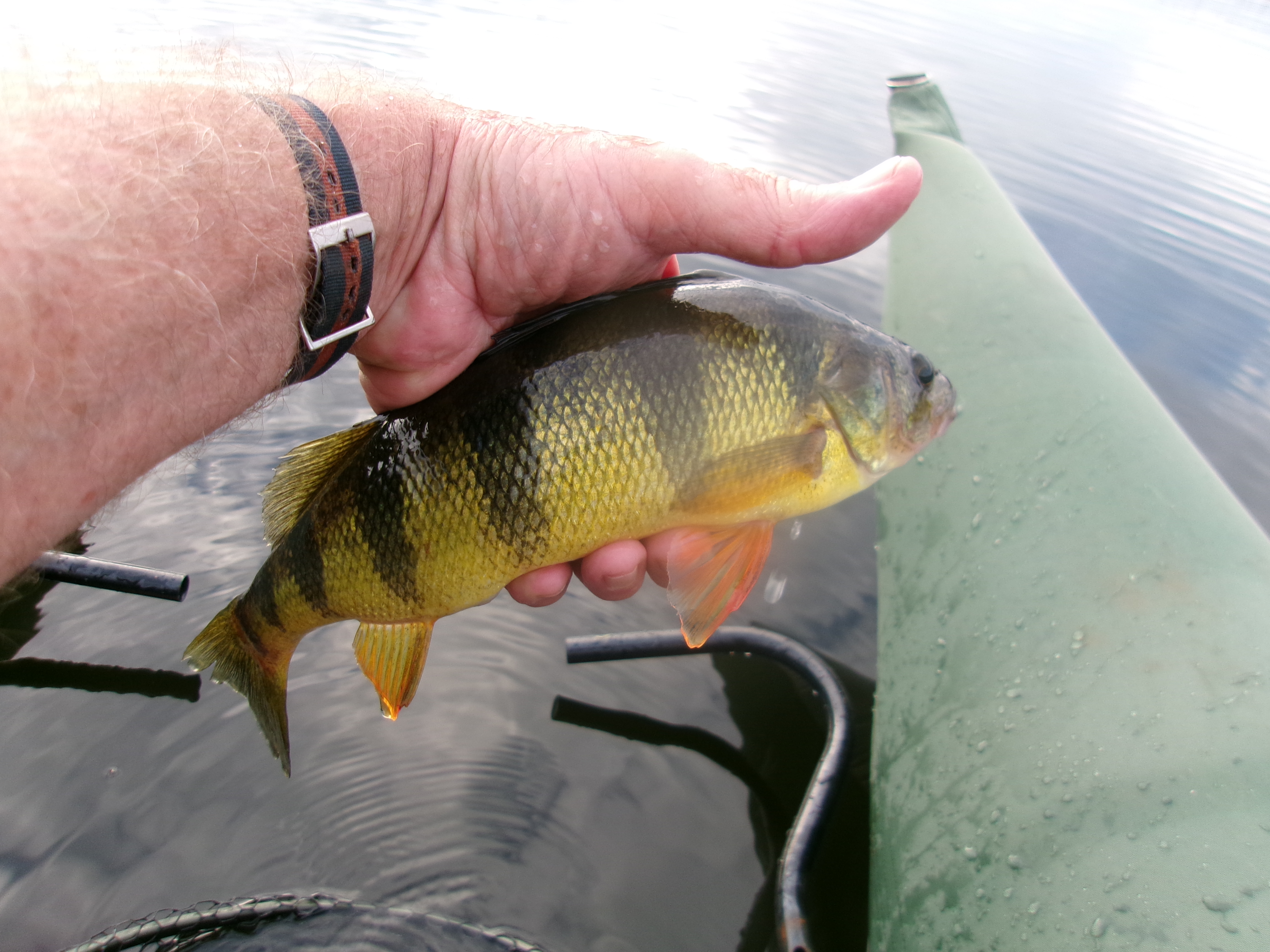

There are a lot of perch messing around this summer. Same as last year, but they’ve all grown about four inches. There’s nothing like a Great Lakes specimen, but pretty good for this place. Feisty, too. Bottom shot shows Mr. Perch expressing his dismay at the situation.
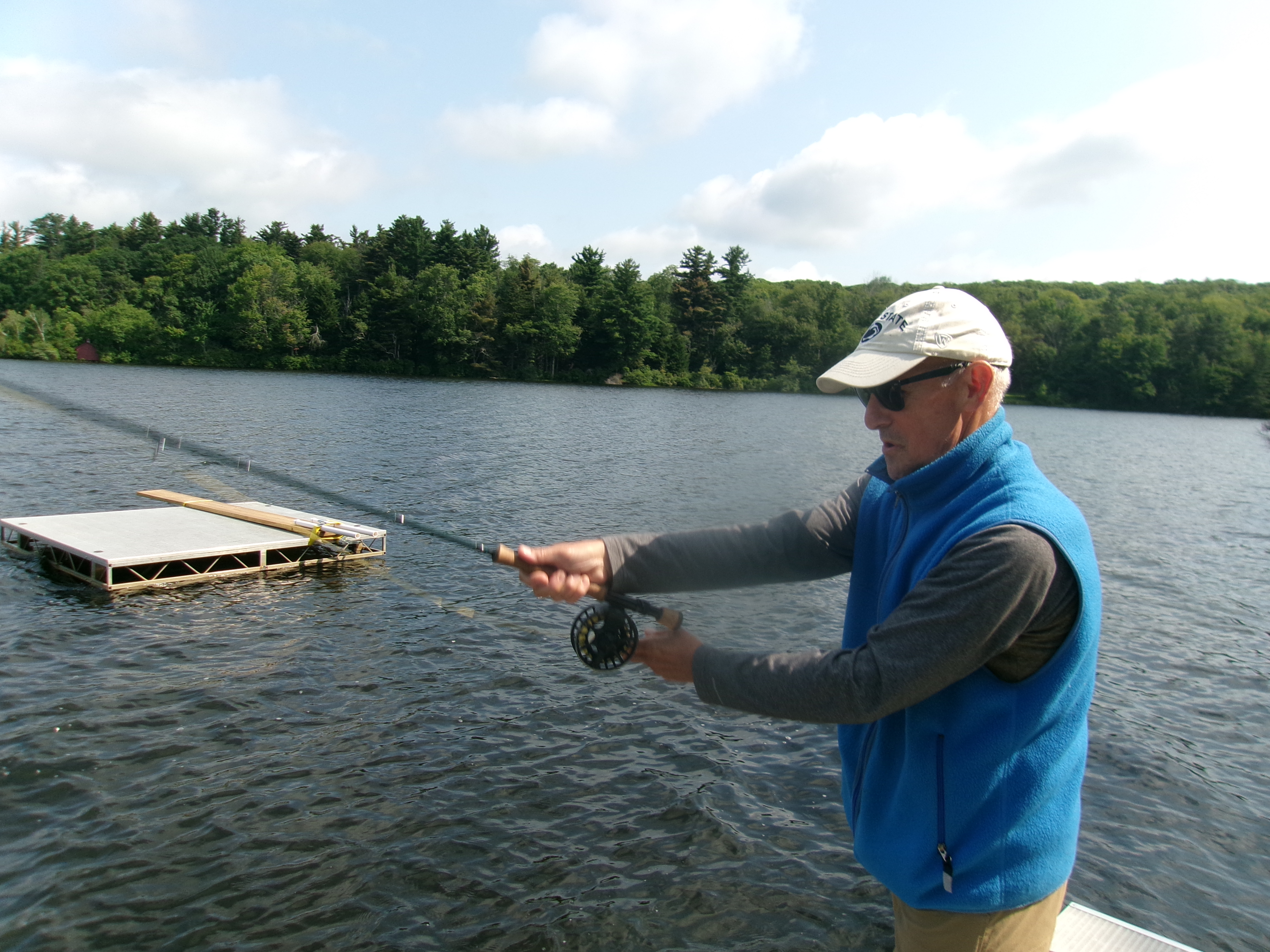
One of my oldest pals, Crosby, expressed an interest in learning the dark arts. I had him out in a canoe and he connected twice but was unable to seal the deal. First one he struck way too hard way too fast, but the second one he had the rod bending and the bass diving. Afterwards we did some casting practice. The gleam in his eye told me a fly shop somewhere is about to make a few bucks.
To borrow the recap formula from John P….
What worked:
Wooly Buggers, size 2-6, cone heads and rubber legs, olive, black, beige. Clousers, Bass Vampires, mops, and those tinselly streamers that look like Christmas tree decorations if you have a warped idea of Christmas. Sink tips, built-in and added, are helpful, as is an intermediate line (one of the very few times I ever use one). Poppers at dawn and dusk.
What didn’t:
Poppers and any other surface fly at any time except dawn and dusk.
Rods/lines:
Orvis 8 foot 3 inch 7 weight with WF7.
Echo 9 foot 8 weight with WF8 and three foot sinking tip
Orvis 10 foot 7 weight over lined with WF8 intermediate.
Basic leader: Bozeman Fly Works 7.5 foot 1X nylon with a couple feet trimmed off and 1X Bozeman fluorocarbon tippet added (including dropper). Almost always fishing two flies at a time subsurface.

