The Many Films of Fu Manchu

The Many Films of Fu Manchu

Between 1965 and 1969 British producer Harry Alan Towers made five flicks starring Christopher Lee as the evil and fiendish Dr. Fu Manchu,  Howard Marion-Crawford as Dr. Petrie, who harrumphs very Britishly, and Tsai Chin as Fu’s daughter Lin Tang, who is no slouch in the evil department. While all these films are respectable enough, they do get a bit schlocky, especially numbers four and five.
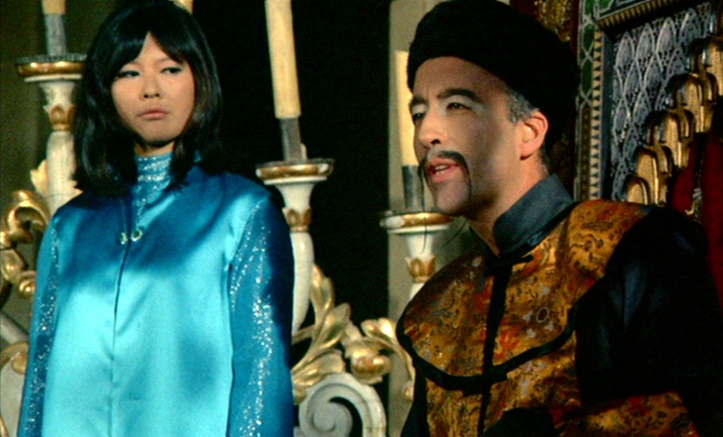
The Face of Fu Manchu (1965): Directed by Don Sharp, the first Fu film gets right to it, with Fu getting his head chopped off with his arch-enemy Nayland Smith (Nigel Green) in attendance.  Hahaha. Fooled you. Or should that be Fu’d you? Anyhoo Fu is very much alive and in London trying to get the Black Hill poppy distilled because a pint of the stuff will kill everyone in the city. One wonders why the acknowledged genius Dr. Fu Manchu, whether on the screen or in the novels by Sax Rohmer, always cooks up such complicated schemes. We’re talking decapitation (implied). Gratuitous henchmen. Gratuitous tweed suits. Minor swashbuckling (in tweed suit, for extra credit). No nekkidity. And for those readers who have trouble getting organized, The Cluttered Desk of Fu Manchu will make you feel better about yourself.
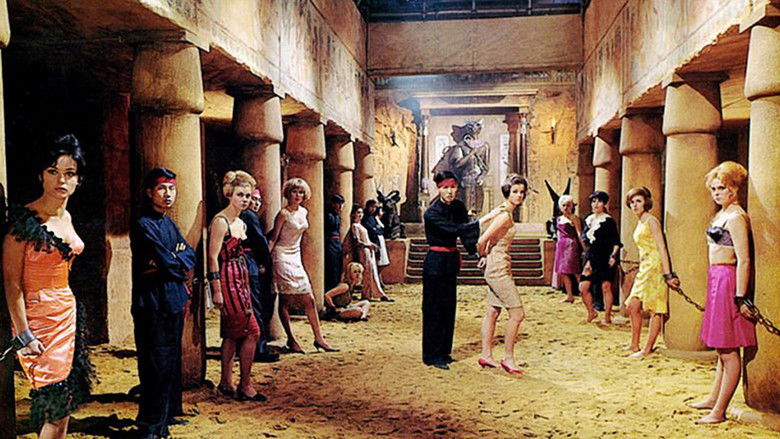
The Brides of Fu Manchu (1966): Don Sharp returns to direct this threadbare spy story that’s got Fu Manchu grafted on top. This time the doctor is developing a Death Ray and he’s kidnapping prominent scientists to help, using their beautiful daughters as collateral. We’re talking snake pit. Gratuitous wearing of Ascots. The unbearable lightness of empty cardboard boxes as hurled about in fight scenes. Death Ray vs. ocean liner. Abrupt non-sequitur in the form of the French Foreign Legion. Brides vs. henchmen fight. No nekkidity. Suggested alternate title: The Unusually Large Boiler Room of Fu Manchu.
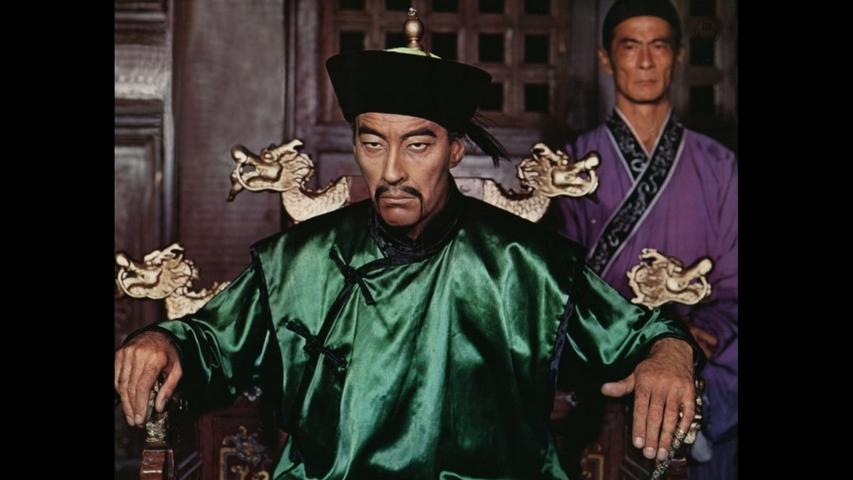
Vengeance of Fu Manchu (1967): Directed by Jeremy Summers and co-produced with Hong Kong’s Shaw studios, purveyors of fine kung fu flicks. Starts off with a cheery mass execution at Fu HQ, conveniently located somewhere near the Great Wall of China. Nayland Smith, played by the appropriately wooden Douglas Wilmer, gets swapped for a double created by Fu’s kidnapped plastic surgeon, and the replacement is no fun at all. Meanwhile Fu is holed up at HQ doing vaguely evil stuff. And there’s a German mercenary in the mix. Gratuitous and endless nightclub singing. Minor kung fu. No nekkidity. Best line: “Hey, what are you doing here?” Featuring The Many Gongs of Fu Manchu, The Humongous Bell of Fu Manchu, and The Awkward Silences of Fu Manchu. By far the weakest entry in this series.   
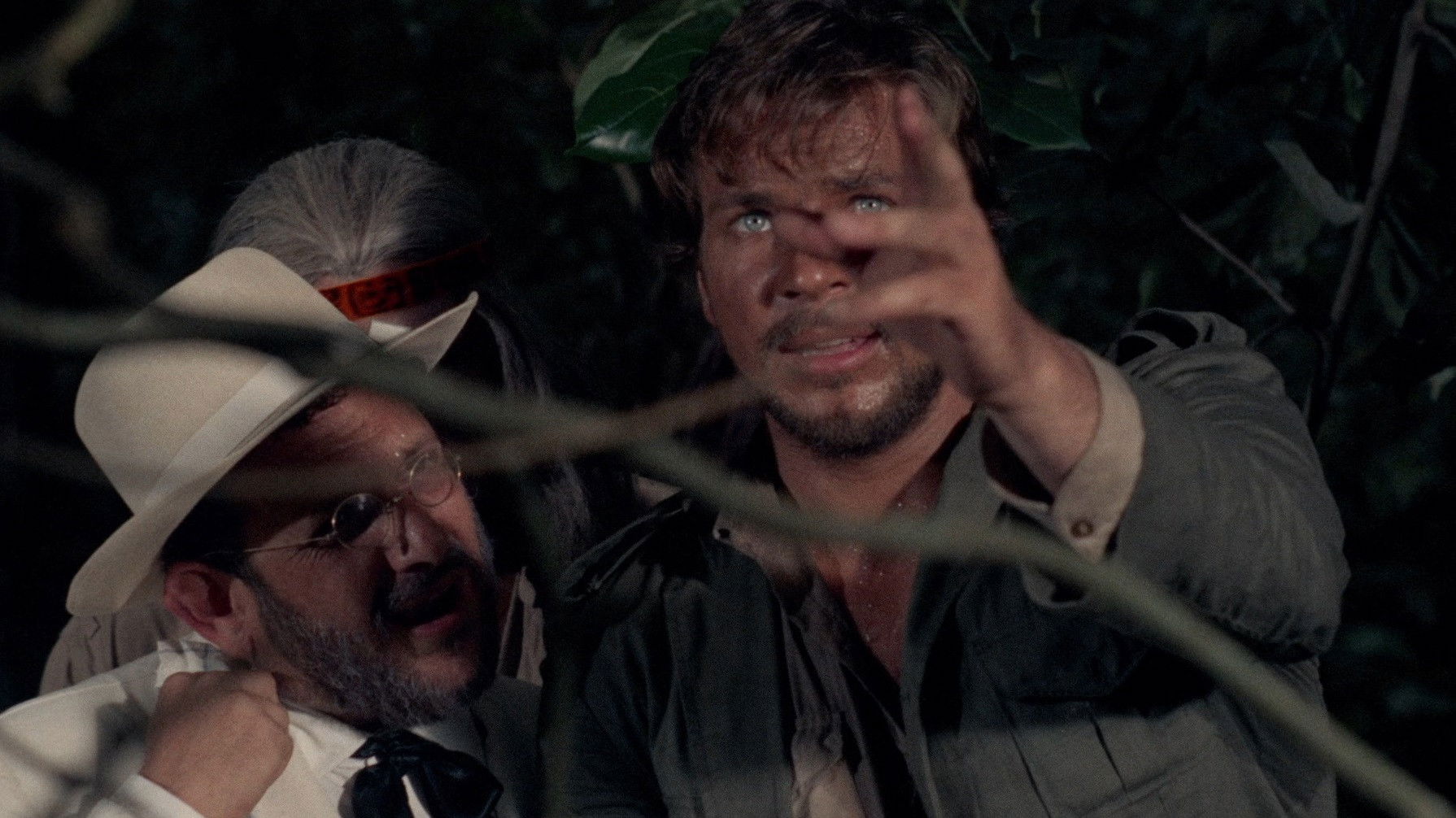
Blood of Fu Manchu (1968): Prolific hack Jess Franco takes the helm for the fourth installment. This time around, Fu’s needlessly elaborate plan is to destroy his enemies by getting  little deadly snakes to bite a bunch of attractive young women. Then they (the women, not the snakes) go and kiss the enemy on the lips. The enemy immediately goes blind and suffers a protracted, unpleasant death, unless someone gets an antidote in time.  Why the girls don’t die when the snakes bite them can be chalked up to Fu’s evil genius. Or, since this is a Jess Franco film, to sheer incompetence. Gratuitous snakes. Gratuitous gongs. Ninjas. Fat bandit chief. Stupid people in the jungle. Harrumphing, British-style. Half-hearted orgy, which almost had some nekkidity but some spoilsport intervened at the critical juncture. Suggested alternative title: The Almost Complete Lack of the Blood of Fu Manchu.
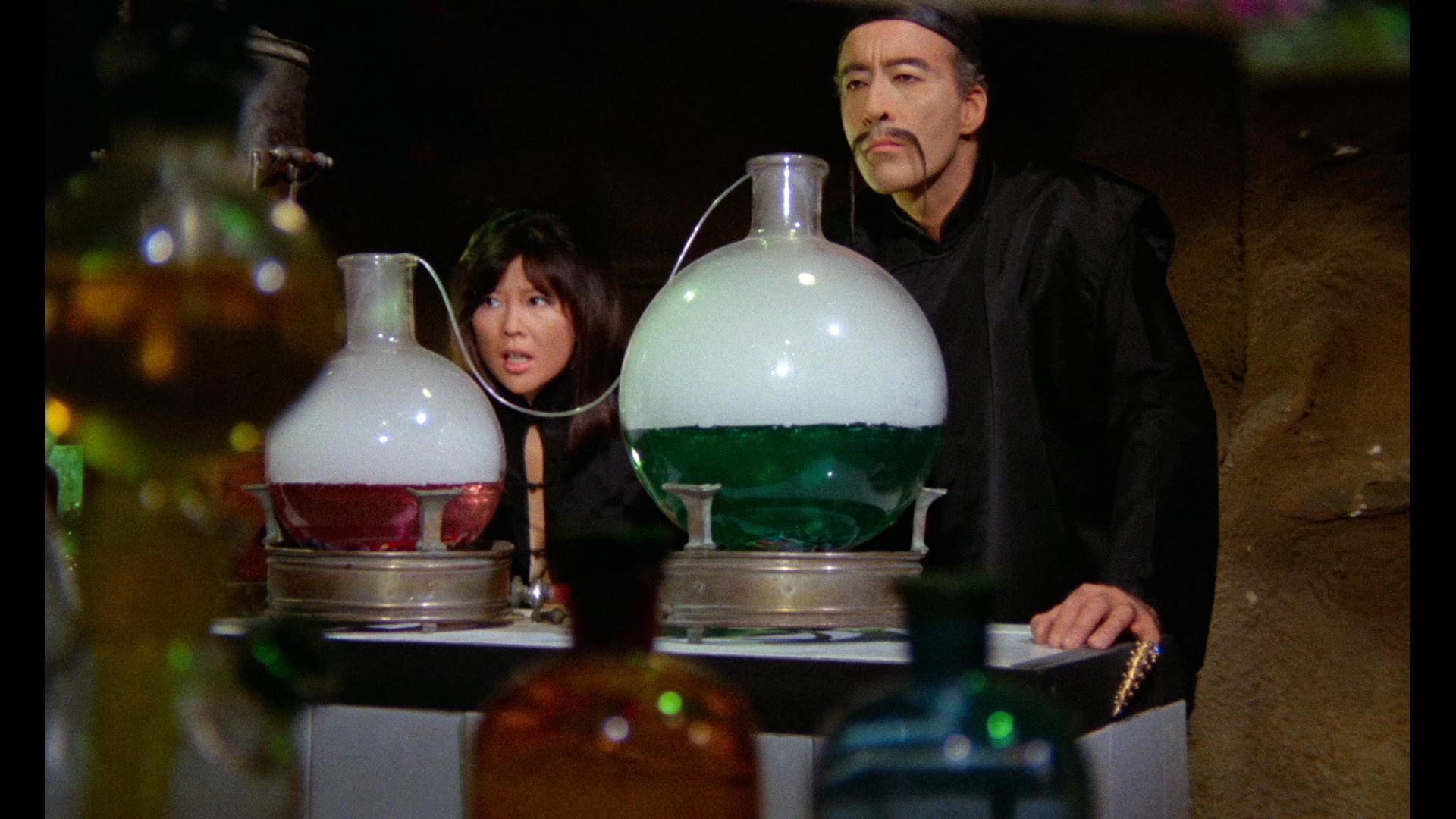
Castle of Fu Manchu (1969): The last in the series and with Franco directing again, the flick is long on silliness and short on coherence. We’re talking fiendish plotting in boats on the Bosphorus. Extended sequence of henchmen trotting around bearing clearly empty coffins on their shoulders. The most unobservant palace guards in cinema history. Gratuitous fat guy in nightshirt. Gratuitous fezzes. The Brightly Colored Liquids Boiling in Flasks of Fu Manchu. No nekkidity.  Classic ending: “The world shall hear from me again.” Except it hasn’t. Alas.
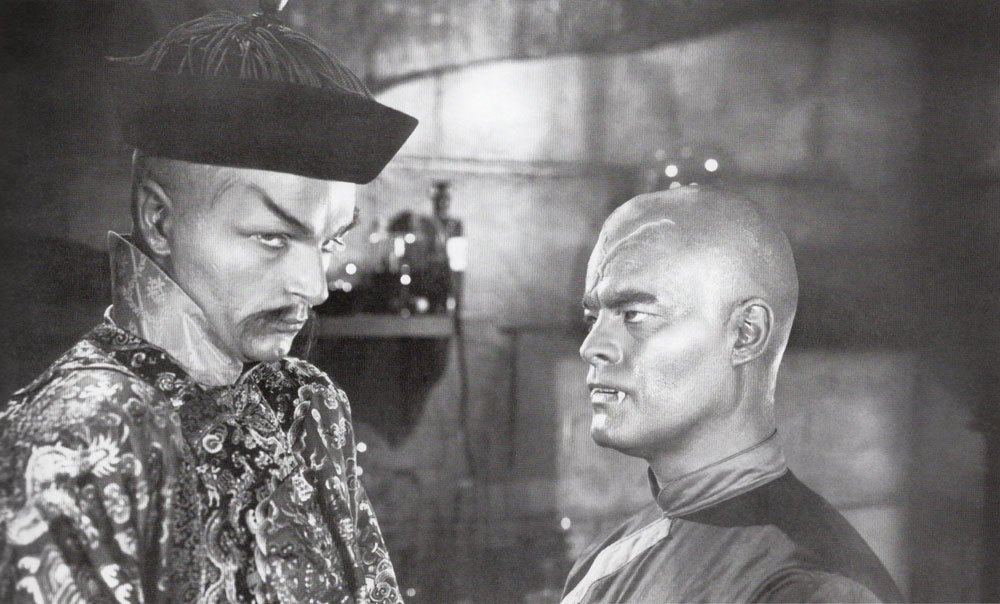
There are two Fu films made with Warner Oland in the title role, one with Boris Karloff, and a TV series with Glen Gordon. They are all interesting in their ways but Fu fans should check out the 1940 Republic Pictures “Drums of Fu Manchu” serial, available in a two-disc DVD set. With Henry Brandon as Fu. Made by the same people who did “Captain Marvel,” with the same sets, graphics, music and extras. Each chapter is about 18 minutes long (except the first, which is 29 minutes) and has a cliffhanger ending. After the U.S. entered World War II and China was an ally, the Chinese government politely asked the State Department if they could put the arm on Republic to cheese it with the Yellow Peril stuff, and that was it for Fu Manchu on the big screen until 1965.

Despite the obvious flaws in the individual movies, as a whole the series rates a hearty three coils with the automatic on coil dedication for no nekkidity.

The Immortal Cynthia Rothrock

The Immortal Cynthia Rothrock

A while back, the Bad Cinema desk was investigating two movies, “Martial Law” and the imaginatively-titled “Martial Law II: Undercover,” both starring a shortish, incredibly fit and rather cheerful-looking woman: Cynthia Rothrock.

Looking into it a bit more, we found that Rothrock has over 80 movie credits and has been a martial arts superstar for decades. So why isn’t she a household name?

Because she’s not named Bruce Lee or Jackie Chan.

It’s an outrage, and we’re gonna do something about it.

In “Martial Law” (1990), Rothrock and Chad McQueen (Steve’s son) are cops and David Carradine is the evil kung fu-practicing international car thief. We’re talking fun with pizza, the most annoying snitch in cinema history, and a compelling visual discourse on the inadvisability of stealing cars at night from a well-lit dealership located on a busy highway. No gratuitous nekkidity, which really isn’t a problem here, as nobody wants to see any of these people nekkid.


Chad is replaced by Jeff Wincott for the sequel, “Martial Law II: Undercover” (1991). This is much rougher stuff, not least because it has a “sex scene” involving Billy Drago. A kung fu villain runs an expanding underworld empire from the kind of bar you can’t get into without a double-breasted suit and a ponytail. There are large, grunting lackeys, a bit of gratuitous nekkidity, and Rothrock delivering swift justice while clad head to toe in teal.

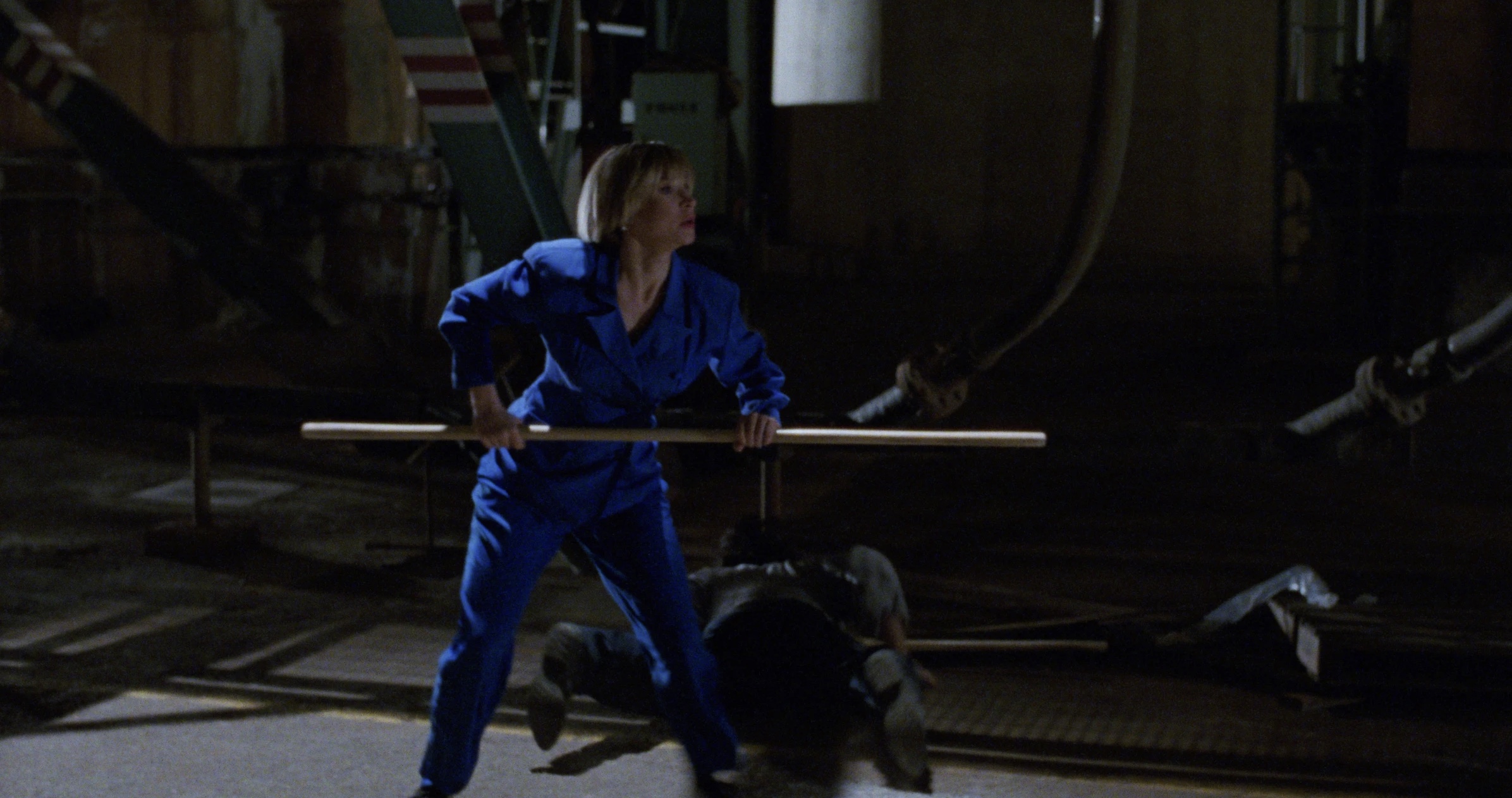
“Yes, Madam” (1985) is Rothrock’s debut, as Carrie Morris, a Scotland Yard inspector in Hong Kong to help Inspector Ng (Michelle Yeoh) do something about a piece of errant microfilm. There is an exceptionally unconvincing dubbing of a British accent for Rothrock, who strongly resembles American Olympian Mary Lou Retton — except Retton didn’t do kung fu. The movie makes no sense, which is OK because it’s short. Plus, Rothrock delivers her trademark scorpion kick to some hapless goon’s forehead, which is worth the price of admission.

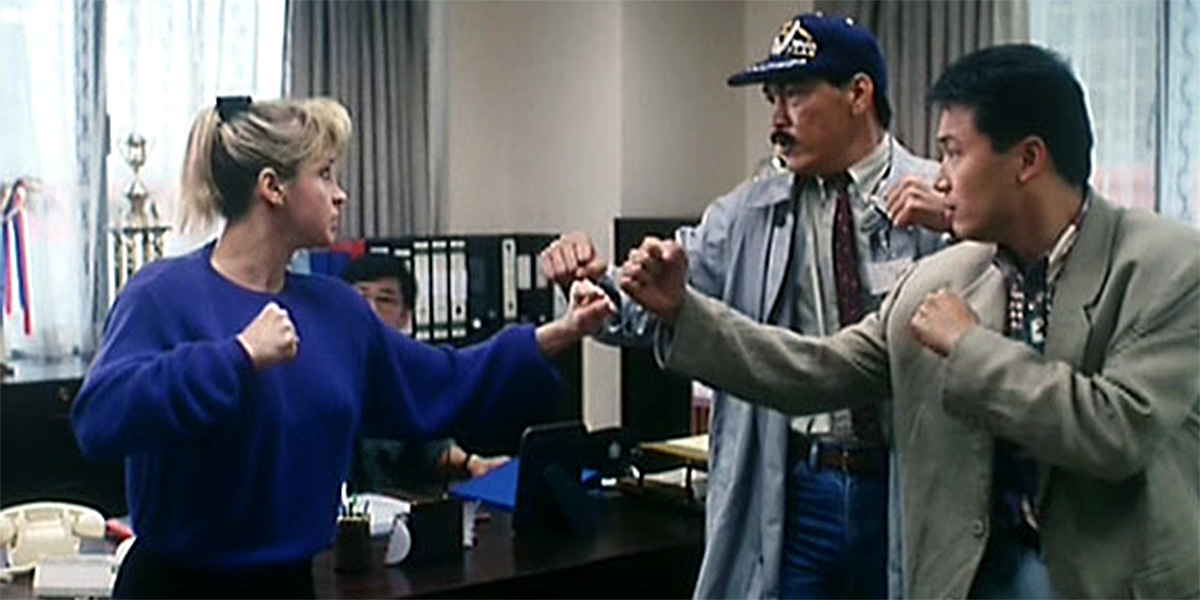
“City Cops” (1989):Here our heroine is FBI agent “Inspector Cindy,” who comes to Hong Kong to fight crime in warehouses, alleys, office buildings and airports. Featuring the spectacular Receptionist’s Desk Roll. We also get a comical cop duo, a martinet police superintendent, and an extended opening riff on gender that would be impossible to make today.

“Undefeatable” (1993) was directed by Godfrey Ho, the Jess Franco of the East, and despite Ho’s Hacko di Tutti Hacki status, this movie actually has a story and makes sense. Rothrock plays Kristi, who participates in illegal fights to earn enough money to get her sister through med school. Meanwhile, Anna dumps her psycho husband, Stingray, who fights on the same underground circuit as Kristi — but he’s a lunatic and has a mullet.

Anyhoo, there is a lot of plot involving a couple of cops and Kristi’s dorky gang, and none of it matters because at the end Kristi and the cop subdue Stingray in extremely gory, horrible and entertaining fashion. And then everybody goes to college.

“Black Creek” (2025): Rothrock produced, co-wrote and starred in this crowdfunded Western, in which she plays a tough woman who rides into town to find her family has been destroyed by the local bad guy, played by the late Richard Norton. You could make a 15-minute reel of Rothrock and Norton kicking each other over the years, so this is a fitting coda. (Norton died in March 2025.) It seems Rothrock spent most of the budget on sets, lighting and costumes, figuring the writing would only get in the way of the story. So it’s heavy on the fighting, and anyone who thinks kung fu and Westerns don’t mix deserves a scorpion kick to the noggin.

See Beautiful Blood Island, and then return to Blood Island. When you’re done you can go back to Blood Island, in between trips to Blood Island.

See Beautiful Blood Island, and then return to Blood Island. When you’re done you can go back to Blood Island, in between trips to Blood Island.

Gerardo De Leon and Eddie Romero, two major names in the Filipino film world, made four “Blood Island” films between them. The first was released in 1959 and is a modest but stylish black and white horror movie. The remaining three were made a decade-plus later, and are proper CACA flicks.

Terror is a Man (1959): Strange economy reworking of “The Island of Dr. Moreau.” Strange because it has a lot of weird plot that gets in the way of the story, and economy because there is only one man-animal hybrid, and because they shot it in black and white. Good production values throughout, which is also confusing when you’re expecting dreck. Decent monster and no nekkidity, because it was 1959.

imdb.com

Terror is in fact a sort of man/cat hybrid.

The universe comes back into balance with the next film in the series, “Brides of Blood Island” (1968). Color film, very little plot to get in the way of the story, man-eating plants, day-for-night continuity problems, cut-rate Desi Arnaz, bargain basement Vincent Price, one bald henchman, mild bimbotation, comical Western notion of native chants, a bit of gratuitous nekkidity, a sex-crazed beast, mutant transformation, lengthy and regrettable dance of triumph scene, a herd of little people and nuclear radiation, which explains the art in the castle. I suspect Sam Raimi had this flick in the back of his mind for the first couple of “Evil Dead” movies. 

blu-ray.com

I’m confused! I look a little like Vincent Price, but I sound nothing like him! And why is that tree trying to eat my wife?

The Mad Doctor of Blood Island (1968): Well, here we are back at Blood Island. This time we’re looking for the cause of a strange disease that turns the natives green. Turns out it’s simple — crazy Dr. Lorca shot a cancer patient up with a rare chlorophyll strain he found on the island. (It’s just science.) Gratuitous nekkidity, green blood, dismemberment, a sort of luau/orgy hybrid, and every time the monster is about to do something the camera zooms in and out rapidly, perhaps to distract the audience from getting a good look at the shabby monster costume. Spoiler: The beast hides out in a lifeboat as the gang sails away from Blood Island, the better to set up…

kitleyskrypt.com

The chlorophyll monster in Mad Doctor of Blood Island doesn’t stand up to close inspection, so the filmmakers wisely don’t let the audience get a good look.

Beast of Blood (1971), in which the monster kicks things off immediately by blowing up the boat, perhaps in protest of the producers’ decision to drop the word “island” from the title. Dr. Lorca’s got a whole army of green mutants now, and the islanders aren’t up to much, so it’s up to Bill Foster (John Ashley) and Myra the dingbat reporter (Celeste Yarnall) to get things sorted out. Which they do, eventually, but not before there’s some highly dubious surgery, a henchman who can only grunt, the usual nekkidity, and several gallons of blood. Oh and an artificial head that talks. Almost forgot. This flick is an excellent example of the plot getting in the way of the story, but when a man sets out to watch all four Blood Island movies, he’s got to tough it all the way out.

http://www.horor-web.cz

John Ashley’s Modified Elvis was passe Stateside in 1971, but he could get away with it on Blood Island.

The Robo Vampire “trilogy”

The Robo Vampire “trilogy”

There are three Robo Vampire movies, all directed by Godfrey Ho (I think). Chronologically, Devil’s Dynamite (aka Robo Vampire 2) is the first, Robo Vampire is in the middle, and The Vampire is Alive (aka Robo Vampire 3) completes the set.

Why is the first one called Robo Vampire 2? That is one of the great mysteries of cinema. Perhaps Robo Vampire 5 will explain it, followed by Robo Vampire 4 and Robo Vampire 7, which will explain the explanation.

Or you can just roll with it.

Robo Vampire (1988): The Bad Cinema desk first encountered this via Rifftrax, which was fine. Thanks to the miracle of Tubi, which must buy the rights to these and similar flicks by the shipload, we were able to watch it unadorned, albeit interrupted by ads for sex pills. Trying to explain the plot would take longer than the 90 minute run time. So let’s skip straight to the gist, which is: Drug smuggling. Gratuitous nekkidity, ghost variety. Intensely unconvincing robot. Assorted goo, glop, and blood. Three Stooges rip-offs. And the entire thing is enlivened by the presence of a platoon of hopping Chinese vampires.

(The hopping vampires require some explanation for the uninitiated. I have run into this in several movies, most notably the “Mr. Vampire” series. The vampires stand straight up, stick their arms straight ahead, and hop toward their victims. They go pretty fast, too. When pressed they can do kung fu. The only way to stop them is to have a Taoist priest stick a prayer written on a strip of paper on their foreheads. This renders them immobile. There’s no nonsense about holy water or crucifixes or silver bullets or wolfsbane or the rising sun or unrequited love or whether the werewolves are sexier. Got it?)

justwatch.com

The Robo Vampire vs. hopping Chinese vampires on a beach somewhere. It’s very exciting. Really.

Devil’s Dynamite (aka Robo Vampire 2, 1987): This has something to do with gold. Somebody’s got some, and everybody else wants it. An example of the dialogue that is supposed to clear things up: “Mary’s joined with Fox. And also a Yank called Ronald.” This line comes about 20 minutes into the flick, and is the first anyone has heard of Mary or Fox, never mind Ronald.

So: Hopping vampires. Black tie event, not interrupted by vampires. Very nicely choreographed fight scene, in which the gangs are color coded for the audience’s convenience.The Robo Vampire, which  isn’t a vampire at all, is a guy in a silver suit and what looks like a motorcycle helmet spray painted silver. Anti-sorcery mirror. Random poisoning.  No nekkidity that I can remember, which means an automatic one star deduction, if we gave out stars. Robo Vampire does Michael Jackson  moonwalk. Surprisingly light on the gore. Makes no sense. Spectacular.

horrorgeeklife.com

A typical, somewhat decomposed hopping Chinese vampire from Robo Vampire 2

The Vampire is Alive (aka Counter Destroyer, aka Robo Vampire 3, 1989): Starts off gently enough, with an impromptu theology lesson from a Taoist priest to two stupid Western women.

But dang it, all that guff about evil spirits turns out to be true. Many shots of feet – feet ascending stairs, feet walking along a path. Attack telephone (rotary dial). Gratuitous screenplay writing. Gratuitous “Nightmare on Elm Street” rip-offs er homages. Crossbow assassination in men’s room. Way too much plot. Lengthy scene at sea that doesn’t seem to have anything to do with anything else. Long segments filmed in the dark. Automatic one star deduction for no nekkidity.

 This is the weakest entry in the Ribo Vampire series by far. But the Robo Vampire now looks like a member of the Golden Horde. Except it’s a silver color. 

monsterzone.com

A tender Freddy Krueger-type moment in Robo Vampire 3 that is absolutely necessary to the plot yet doesn’t get in the way of the story. Joe Bob says check it out.

Midwinter CACA

Midwinter CACA

It’s been a long, boring winter, and it’s snowing as I peck this out. Thank goodness for the proliferation of free-with-ads streaming services that specialize in films so majestic, so unforgettable that nobody bothered to renew the copyright.

Zombie Nightmare (1987): From the oeuvre of Canadian bodybuilder and hair metal musician Jon Mikl Thor, this tale of small town bigotry, casual misogyny and voodoo zombies lacks the critical component that makes or breaks the exploitation flick: gratuitous nekkidity. Not that any sentient being would want to see this cast, which includes Adam West, nekkid. But it’s the principle of the thing. You can do much better with…

Rock ‘n’ Roll Nightmare (also 1987): Thor’s showcase flick, starring his hair, his pecs, and his unconventional taste in underwear. Nekkidity abounds. In fact nekkidity drives the plot. With little foam rubber demons, one large economy-sized foam rubber demon, a foam rubber remake of the famous “busting out” scene in “Alien,” and an absolutely ear-shredding soundtrack performed by Thor and the Tritonz.

Adam West’s mustache is the true “Nightmare.”

Jon Mikl Thor’s unconventional taste in underwear is one of the highlights of “Rock and Roll Nightmare.”

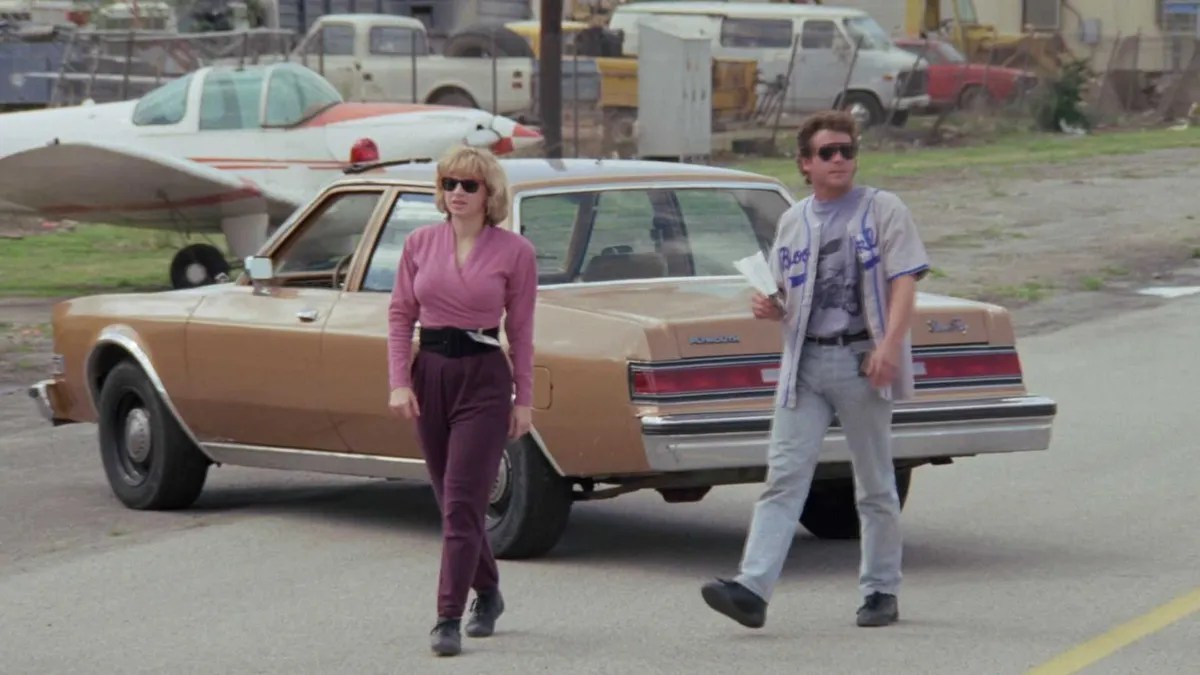
Dangerous Men (1984-2005): This incomprehensible revenge flick somehow took 21 years to make. This explains the odd inserts of grainy footage featuring 1986 Chevy Caprice cop cars and the shot of a jet taking off somewhere, sometime, for no reason connected with the plot. Oh yeah, the plot. A plucky girl’s boyfriend is murdered by bikers. She tracks them down and kills them in highly unpleasant ways until she’s arrested. The End. Haha! Fooled ya! Suddenly we’re in the lair of drug kingpin Black Pepper, who wears tighty whities and has a seizure-prone belly dancer on the domestic staff. With gratuitous nekkidity, artistically ambiguous ending and the second-worst kung fu in cinema history (the worst being in 2002’s “Fungicide”).

The two men on the left are extremely dangerous.

Battle for the Lost Planet (1986): A thief named Harry steals a cassette tape with something important on it, and escapes from the police by stealing a space ship. Alas, the pig-faced grunting aliens choose this moment to attack the Earth, so when Harry gets back after five years of wandering through space it’s a brave and unpleasant new world. Along the way he meets stoners and a woman with an Australian accent and mutants and bikers and his new ally Mad Dog Kelly and of course more pig guys. The movie is framed by Harry as an old man telling the story but they forgot to shoot enough old Harry footage. Mad Dog Kelly looks like a hideous mix of the genes of Sylvester Stallone and  Magic Dick, the harmonica player in the J. Geils Band. With special effects reminiscent of an Atari game console ca. 1982, badly-lit nekkidity, and a giant attack ant. Or is it a scorpion? 

In Battle for the Lost Planet, Mad Dog Kelly (Joe Gentissi) can’t decide if he looks like Sly Stallone or Magic Dick. 

Velvet Smooth (1976) is a poor man’s “Foxy Brown” and also the greatest (and only) film in the oeuvre of Emerson Boozer, the poor man’s Rosey Grier. Velvet Smooth (Johnnie Hill) is a private detective and when local kingpin King Lathrop starts having trouble with goons muscling in on his highly lucrative action (numbers and protection money from a dry cleaner, a shoeshine guy and a newsie), Velvet Smooth gets the call. Unconvincing kung fu, an illegal casino, a cut-rate Diana Ross and the Supremes, and subtle visual commentary on why you don’t want to combine a zebra-striped couch with blonde wood paneling if you are a self-respecting kingpin who wants an impressive lair.

Velvet Smooth (Johnnie Hill)  talks it over with New York Jets running back Emerson Boozer (as Mat). Oddly, neither one ever acted again.

The Happy Hooker Goes Hollywood (1980): The last of three Happy Hooker flicks, starring the immortal Martine Beswick as Xaveria Hollander, the Happy Hooker. Plus Adam West, Phil SIlvers, Chris Lemmon and Richard Deacon. So it’s like a slightly raunchy episode of “The Love Boat” minus the boat. Enough gratuitous nekkidity to advance the plot, which mercifully does not get in the way of the story. As dour Hollywood melodramas go, it’s no “Day of the Locust” or “What Makes Sammy Run,” but there are glimmers of actual human intelligence at work in a scene where the HH takes on snarky TV gossip witch Rita Beater (Edie Adams). Plus a “Some Like It Hot” ripoff that would probably provoke a riot in 2025. In short, it’s almost not bad enough to make the S&A cut. Almost.

Sophisticated banter is the order of the day in the Happy Hooker Goes Hollywood.